
Curious About Bitcoin — But Concerned About Volatility?
Because how investors experience Bitcoin matters more than believing in it.

During the 2022 crypto collapse, Bitcoin fell nearly 70%. A rules-based tactical approach experienced significantly smaller declines by adjusting exposure as conditions changed. That difference isn't about predicting markets — it's about whether investors feel forced to sell during stress or are able to stay engaged through volatility.
- Why buy-and-hold Bitcoin isn't the only way to participate in its story
- How Bitcoin, gold, and cash have historically behaved differently during stress and recovery
- How a rules-based process may adjust exposure instead of reacting emotionally
- Key risks to understand and questions to ask a financial advisor
RIA Channel Interview: Why Advisors Need a Plan for Bitcoin Volatility
People Aren't Rejecting Bitcoin — They're Rejecting the Volatility.
Many investors are interested in Bitcoin's long-term potential but struggle with how extreme price swings feel in real life. The challenge isn't believing in Bitcoin — it's managing exposure when volatility tests patience and decision-making. A rules-based approach can help remove emotion from the process by adjusting exposure as market conditions change, rather than reacting in the moment.
"Emotions are not part of what's going on here — especially the headlines."
Educational and portfolio-context discussion only — not individualized investment advice.
Why Bitcoin Is Different From Other Volatile Assets
Why Buy-and-Hold Breaks Down for Bitcoin
Bitcoin's biggest challenge isn't long-term potential — it's the experience along the way.
Large drawdowns tend to happen fast, recovery can take time, and investors are often forced to make decisions at the worst moments.
Clip 02:20–02:32
"Bitcoin has 70% drawdowns... both have a place in a portfolio, but neither should be purchased without a discipline."
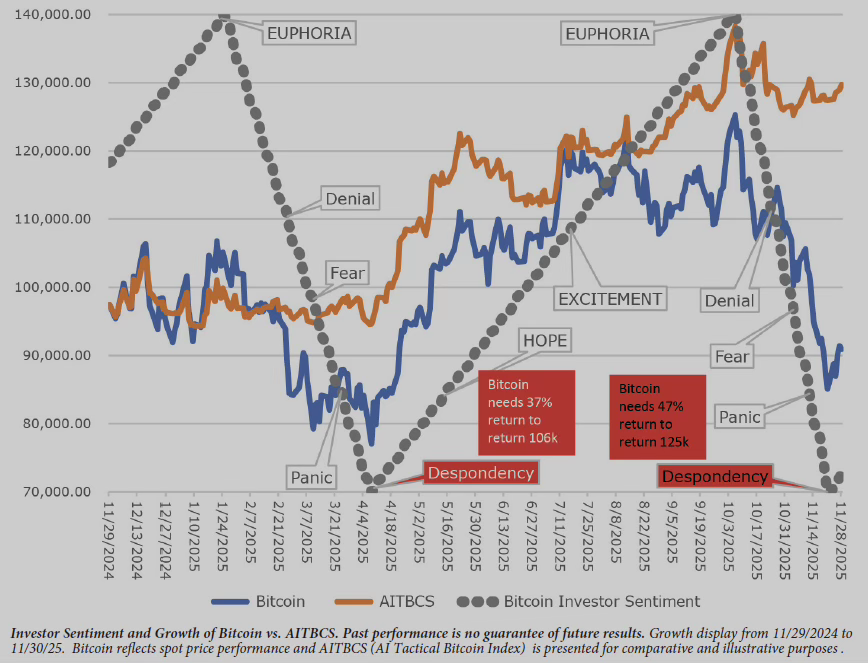
Key Insight: With Bitcoin, how returns are experienced often matters more than the final outcome.
 |
|The Fund invests in Bitcoin futures and does not invest directly in Bitcoin or physical gold. Bitcoin and Bitcoin futures involve significant volatility and risk.
The Real Problem Isn't Bitcoin — It's Riding Every 60–70% Drawdown
Bitcoin’s volatility creates challenges for real investors:
- Drawdowns of 50–70% or more have occurred multiple times
- Long-only exposure means enduring steep declines emotionally
- Most investors struggle to stay invested through the worst drops
A rules-based approach may help by:
- Defined triggers guide allocation decisions — not emotions
- Rotating among Bitcoin, gold, and cash based on market conditions
- Designed to reduce exposure during high-volatility periods
Key Insight: The problem isn't Bitcoin's potential — it's surviving the volatility long enough to benefit from it.
Learn how a tactical approach may handle different parts of the Bitcoin cycle — download the free guide.
Hypothetical illustration for educational purposes only. Not a guarantee of future results.
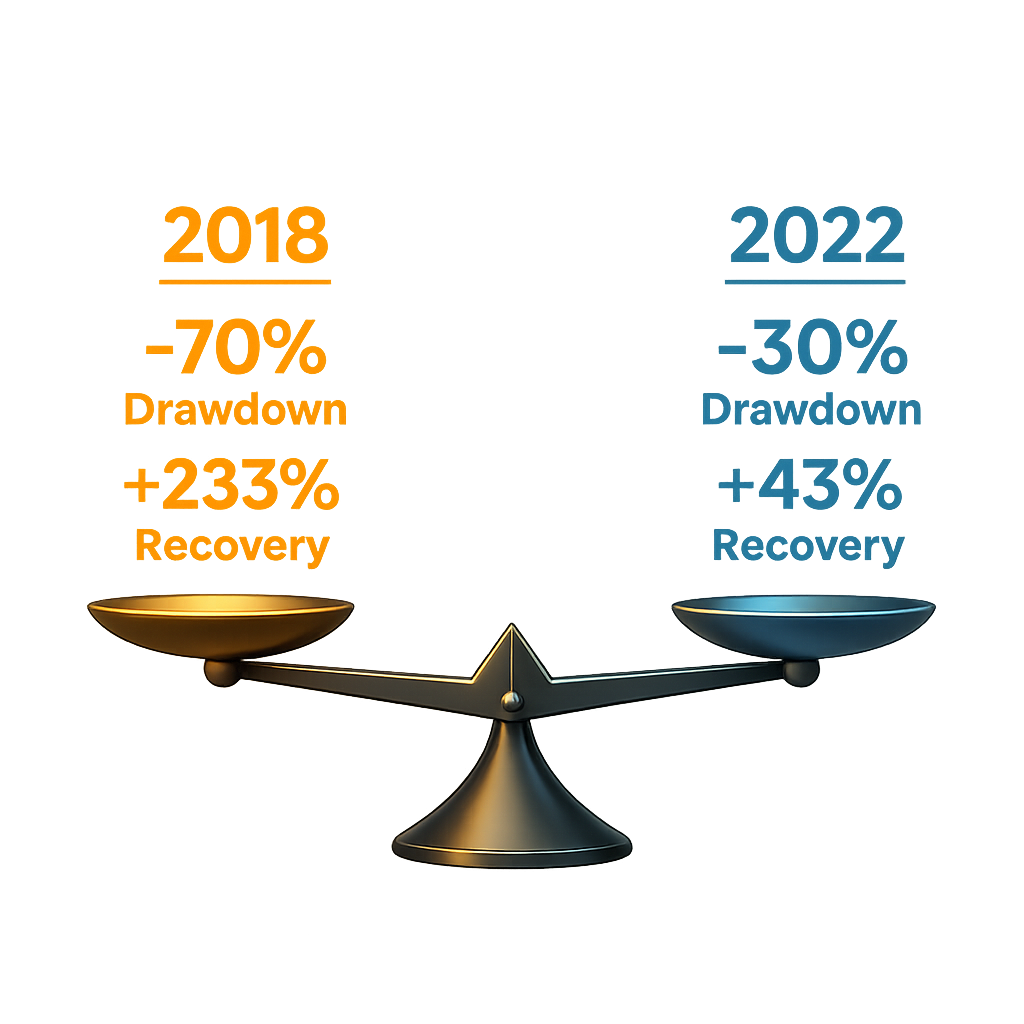
Illustrative drawdown examples based on historical Bitcoin market declines observed during prior market cycles, including the 2018 and 2022 drawdowns. Shown for educational purposes only
Where to Buy ORO
ORO is an ETF that can be purchased in a standard brokerage account using ticker ORO.
Choose your platform below to open your brokerage and search ticker ORO.







Brokerage firms shown are not affiliated with ArrowShares and inclusion does not imply endorsement. Brokerage trademarks are the property of their respective owners.
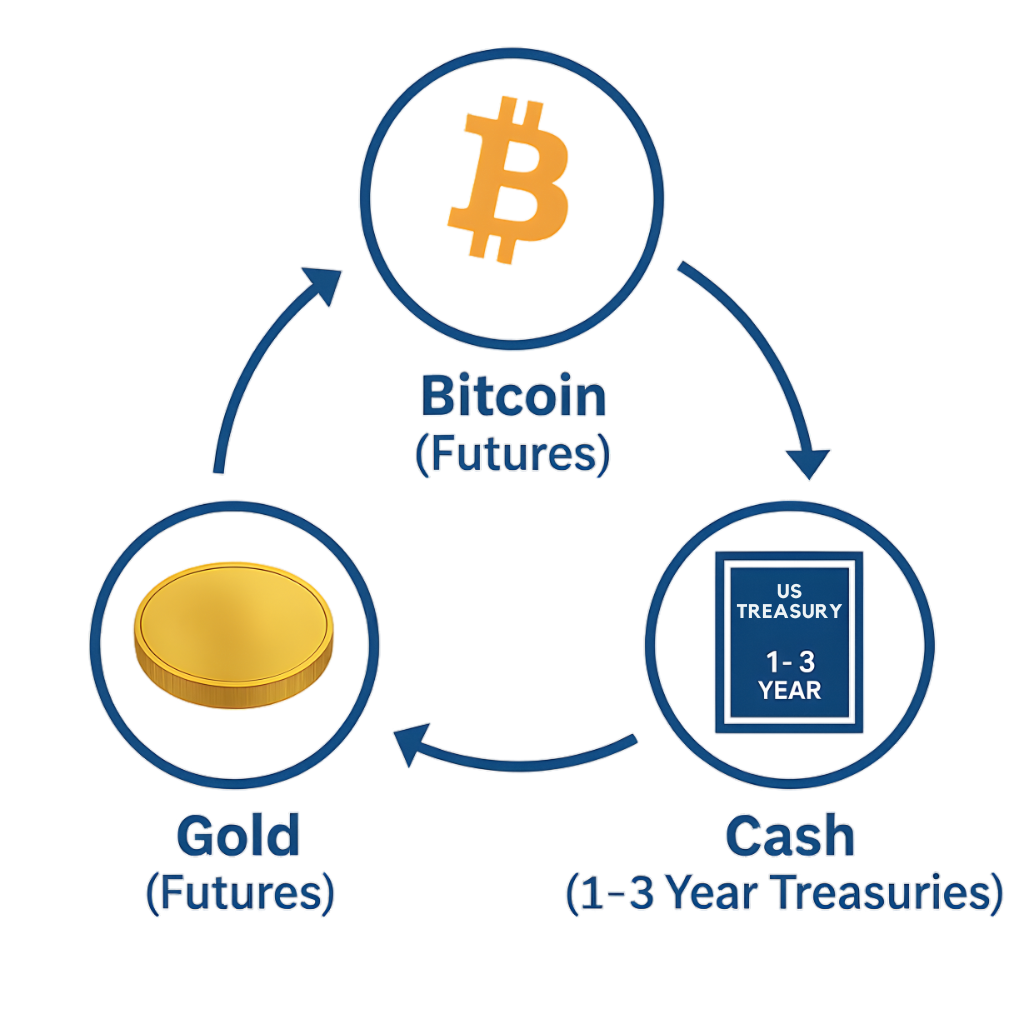
Illustrative overview of ORO's rules-based rotation among Bitcoin futures, Gold futures and 1–3 Year Treasuries. For educational purposes only.
Watch: How ORO Rotates Between Assets
Bitcoin Is the Growth Engine. Gold Is the Anchor. Cash Is the Cooling System.
ORO uses a rules-based process to adjust exposure among Bitcoin, gold, and cash as market conditions change — rather than trying to predict every move.
Bitcoin
— The Growth EngineHigher-risk growth exposure when conditions are supportive.
Gold
— The AnchorPotential ballast during periods of stress and debasement concerns.
Cash
— The Cooling SystemMay help reduce exposure during breakdowns and provide flexibility to re-engage later.
We don't predict the traffic — we react to it.
Want to see how this framework might be applied in practice? Download the free guide.
Why This Bitcoin Cycle May Feel Different
Hard assets are speaking. ORO listens.

"Bitcoin tends to move with liquidity. When liquidity contracts, risk assets struggle. When conditions ease, Bitcoin has historically been sensitive to that shift.
Panic & Stress
When liquidity tightens, Bitcoin often falls sharply with other risk assets.
Policy Response
Central banks and governments may respond; liquidity conditions can change.
Reflation & Recovery
Historically, Bitcoin has often been sensitive to changes in liquidity conditions.
Where ORO Fits
ORO's signals are designed to adjust exposure as conditions change across the cycle.
""Bitcoin tends to move with liquidity. When liquidity contracts, risk assets struggle. When conditions ease, Bitcoin has historically been sensitive to that shift.
Inside "Understanding Tactical Bitcoin"
The Bitcoin Cycle in Plain English
Simple explanations of panic, policy responses, and recovery phases.
Why Gold and Bitcoin Don't Tell the Same Story
How gold often responds to stress, while Bitcoin tends to react to changing liquidity.
How a Tactical Process Uses Bitcoin, Gold and Cash
Visual examples of how signals may adjust exposure over time.
Questions to Ask Before Allocating
A checklist to discuss with a financial advisor, including risks, sizing and expectations.